



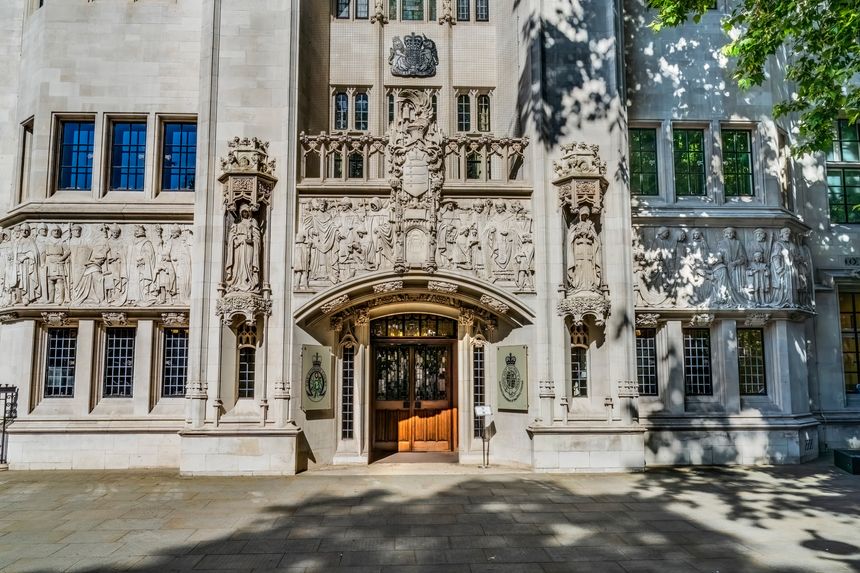



On 4 March 2026 the Supreme Court handed down judgment in The Kingdom of Spain v Infrastructure Services Luxembourg S.A.R.L. and another and Republic of Zimbabwe v Border Timbers Ltd and another, establishing the UK's position on state immunity in proceedings for the recognition and enforcement of awards under the International Centre for Settlement of Investment Disputes Convention ("ICSID Convention"). The ICSID Convention created the legal framework for foreign investors and States to resolve disputes and established ICSID as the forum for doing so. Pursuant to Article 54 of the ICSID Convention, each contracting state must recognise an arbitral award as binding and enforce its pecuniary obligations as if it were a final judgment of its own courts.
The Supreme Court heard the cases as a joint appeal and came to the unanimous conclusion that, by agreeing to Article 54(1) of the ICSID Convention, contracting states clearly and unequivocally submitted to the adjudicative jurisdiction of the courts of other contracting states in proceedings for the recognition and enforcement of ICSID awards. However, states retain immunity from execution.
Background
The Kingdom of Spain v Infrastructure Services Luxembourg S.A.R.L. and another
Infrastructure Services Luxembourg S.A.R.L. and Energia Termosolar BV claimed that they invested €139.5 million in renewable energy facilities in Spain. Following regulatory changes, Infrastructure succeeded in ICSID arbitration and Spain was ordered to pay €112 million. The award was later registered under the Arbitration (International Investment Disputes) Act 1966 as if it were a final judgment. Spain sought to set aside the registration on the basis of state immunity.
Republic of Zimbabwe v Border Timbers Ltd and another
Border Timbers obtained an ICSID award of over US$124 million against Zimbabwe arising from alleged expropriation of land. The award was registered under the 1966 Act and Zimbabwe sought to set it aside on immunity grounds.
Court of Appeal
The Court of Appeal dismissed both appeals, holding that article 54(1), properly interpreted, constituted a sufficiently clear and unequivocal prior submission to jurisdiction within the meaning of section 2(2) of the State Immunity Act 1978 ("SIA").
Issues considered by the Supreme Court
The principal issue was whether Article 54(1) of the ICSID Convention constitutes a clear and unequivocal submission to the jurisdiction of the English courts for the purposes of section 2(2) SIA.
The Supreme Court's decision
The Supreme Court dismissed both appeals and ruled that Spain and Zimbabwe had clearly and unequivocally submitted to the adjudicative jurisdiction of the English courts and could not rely on state immunity to resist recognition and enforcement of the awards.
The Court held that the relevant test under section 2 SIA is whether the treaty contains a clear and unequivocal expression of consent to jurisdiction, which may arise from the ordinary meaning of the words used and what is necessarily inherent in them, interpreted in accordance with the Vienna Convention on the Law of Treaties.
Central to the Court’s reasoning was the reciprocal nature of article 54(1): each contracting state agrees both to recognise awards and to accept that awards against it will be recognised and enforced in other contracting states. This is incompatible with maintaining immunity from adjudicative jurisdiction.
The Court emphasised the distinction within the ICSID scheme between recognition and enforcement on the one hand, and execution on the other. Immunity from execution is preserved under Article 55, but does not extend to recognition and enforcement proceedings, which involve the exercise of adjudicative jurisdiction.
The Court considered it unnecessary to determine whether the arbitration exception under section 9 SIA applied and expressed no view on that issue.
Commentary
This judgment establishes that states cannot rely on immunity to resist the recognition and enforcement (in the sense of registration as a judgment) of ICSID awards in the UK, placing investors in a strong position to convert awards into domestic judgments. However, as states retain immunity from execution, significant practical obstacles may remain in enforcing awards against state assets.
The decision also reflects the reciprocal and self-contained nature of the ICSID enforcement regime.
/Passle/5cc80bfbabdfe80ea0d70502/SearchServiceImages/2026-10-06-17-12-04-177-6ac52be4e2138e97236cb267.jpg)
/Passle/5cc80bfbabdfe80ea0d70502/SearchServiceImages/2026-10-05-15-13-32-604-6ac3be9c7533beb6e63da54b.jpg)
/Passle/5cc80bfbabdfe80ea0d70502/SearchServiceImages/2026-10-05-15-06-21-150-6ac3bced147a7b8e1acf3a05.jpg)